 Case Study
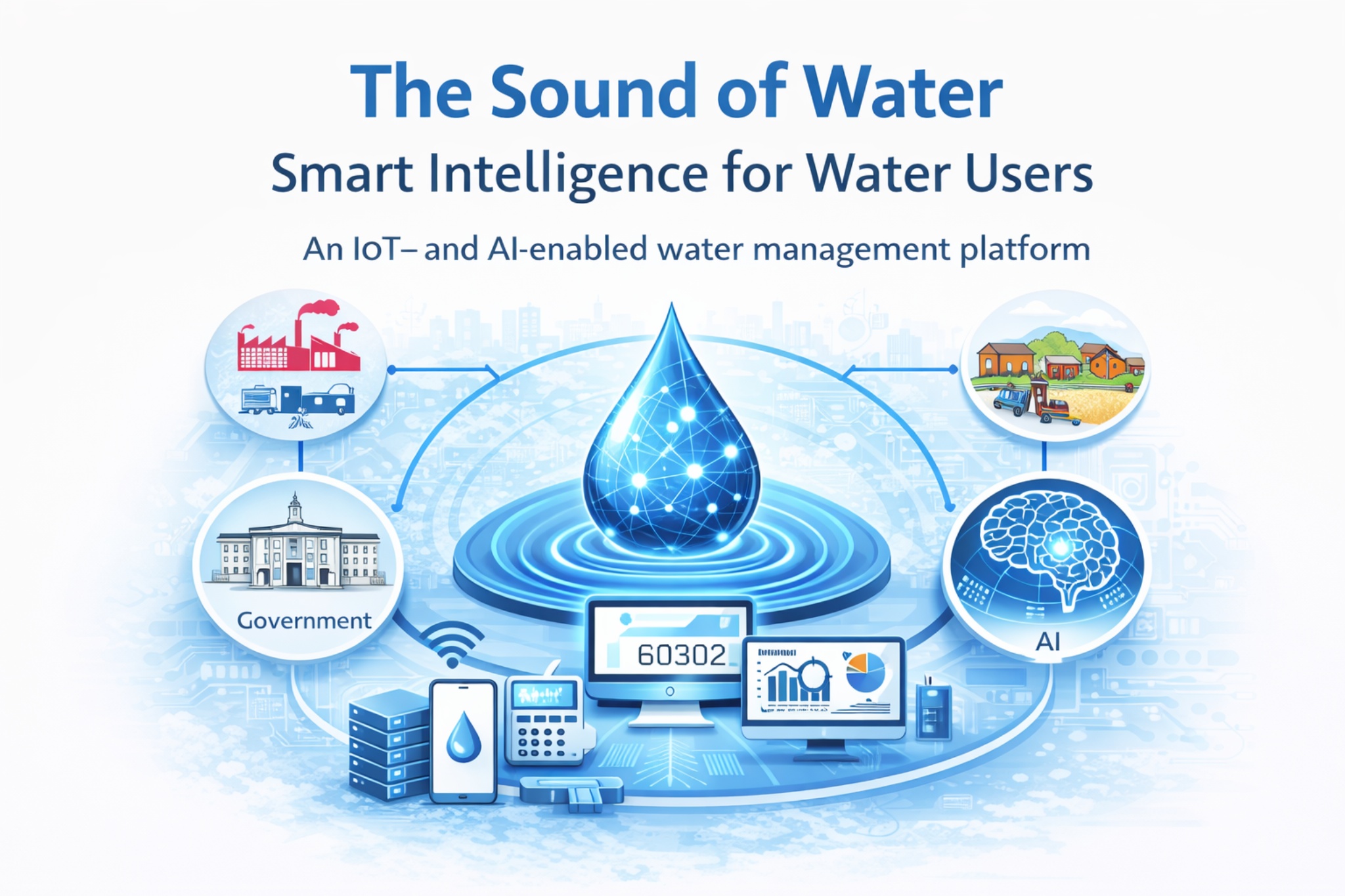
DECODING THE SOUND OF WATER: A CASE ON THE SMART INTELLIGENCE FOR WATER USERS
Abstract: This case follows the entrepreneurial journey of SB, a technologist, who built DropbyDrop, an IoT-based, cloud-enabled water management platform—born from his personal sensitivity to water wastage. The product has been successfully adopted across 26 countries; however, it faces resistance to scaling in India, despite looming water scarcity in the country.
The case introduces students to the systemic challenges of the diffusion of essential public utilities, especially in the context of UN Sustainable Development Goals (SDGs), and pushes them to design interventions that go beyond just technology, to consider infrastructure, policy, behavior, pricing, inclusiveness, and system-wide thinking.
Learning Objectives
By the end of this case, the students will be able to –
1. Examine how social enterprises align with UN’s sustainable development goals (Clean water and sanitation) and intersect with other goals like SDG-9 (Industry, Infrastructure and Innovation) and SDG-11 (sustainable cities and communities).
2. Understand that Smart Water management is not just a tech solution, but a system level intervention involving governance, pricing, infrastructure and social behavior.
3. Identify challenges in scaling sustainable solutions in emerging market contexts, despite proven global acceptance.
4. Assess how product design fosters inclusiveness across user profiles, from gated urban communities to rural farmers, or from pure municipal units to industrial units.
5. Assess the often-invisible costs of curated water-from sourcing, storing, purifying, distributing, managing and billing loss. And, how DbD offers measurable RoIs.
6. Propose viable strategies (social, policy, market or behavioral) to drive adoption of water saving innovations in context like India.
-
 Pub Date:05 Feb 2026
 -
 Source:ICRC
 -
 Discipline:Strategic Management,Entrepreneurship & Startups / Innovations
 -
 Product#:3107
 -
 Keywords:Strategy & Entrepreneurship, Sustainable entrepreneurship, Scaling startups, Innovation diffusion, Smart water management, Internet of Things (IoT),Artificial Intelligence (AI),Water conservation, Resource efficiency, Non-revenue water (NRW),SDG 6 (Clean Water & Sanitation),Urban infrastructure, Public utilities management,
 -
 Length:Pdf : 8 page(s) ,
 Case Study